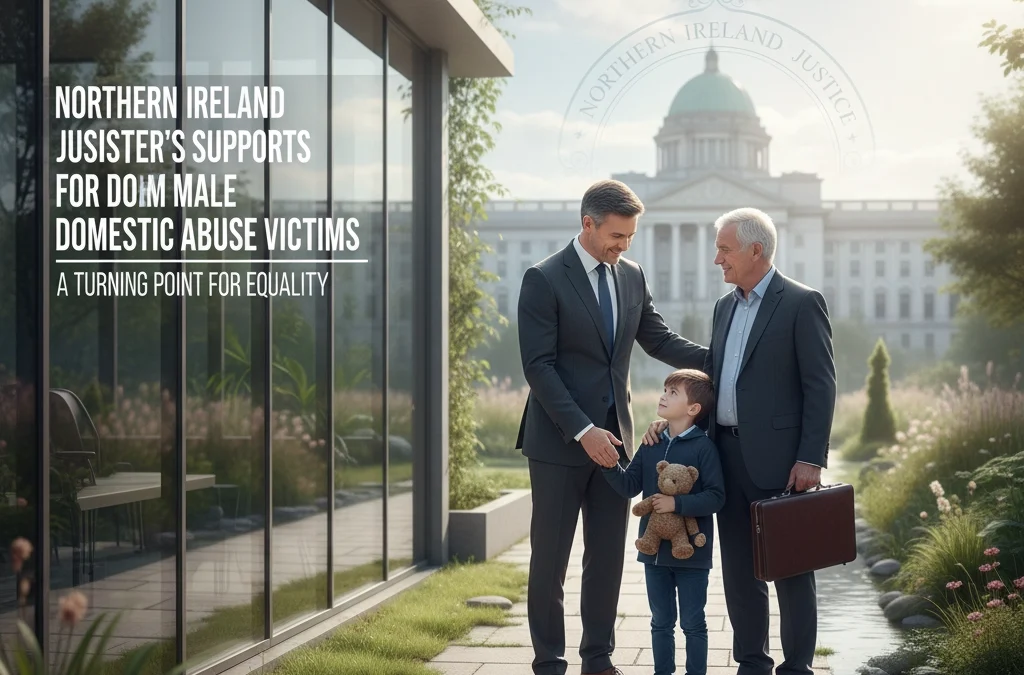
Something remarkable just happened in Northern Ireland. Justice Minister Naomi Long stood up and said what many of us have been waiting to hear for years: male victims of domestic abuse deserve equal support, recognition, and protection.
This isn't just political posturing. This is a watershed moment that could reshape how we approach fathers' rights across the UK. When a senior government minister publicly acknowledges that men face domestic abuse at alarming rates: and that our systems have failed them: we're witnessing the kind of advocacy breakthrough that can transform lives.
Fathers United. Rights Respected. This principle isn't just about custody battles or contact arrangements. It's about recognizing that dads, partners, and male family members deserve safety, dignity, and support when they're victims too.
The Numbers Don't Lie: 30% of Domestic Abuse Victims Are Men

Here's the reality that's been hiding in plain sight: PSNI statistics show that 30% of domestic abuse victims in Northern Ireland are men. That's not a small minority: that's nearly one in three victims.
Think about what that means in practical terms:
- Thousands of fathers experiencing abuse while trying to maintain relationships with their children
- Men facing threats, control, and violence but finding nowhere to turn
- Dads caught between protecting themselves and staying connected to their kids
- Male victims dismissed by systems designed primarily for female survivors
This data from domestic abuse awareness expert Nuala Lappin and others confirms what many of us in the fathers' rights community have long suspected: men are suffering in silence at epidemic levels.
The underreporting among men is even more concerning. Cultural expectations, stigma, and lack of male-focused services mean these 30% figures likely represent just the tip of the iceberg.
Breaking Down the Walls of Stigma
Minister Long's public support tackles something fundamental: the stereotype that men can't be victims.
For too long, our society has operated on outdated assumptions:
- "Real men don't get abused"
- "He must have done something to deserve it"
- "If he was really being abused, why didn't he just leave?"
These attitudes don't just hurt individual men: they devastate families. When a father is trapped in an abusive relationship, his children witness the trauma. When he can't access support, his ability to be present and protective as a parent suffers.
Every Dad Matters. This isn't just our slogan: it's a recognition that healthy, supported fathers create healthier families.
The minister's stance directly challenges the gender stereotypes that have kept male victims isolated. By acknowledging that men face unique barriers to seeking help: including fear of not being believed and lack of specialist accommodation: she's opened the door to real solutions.
The Refuge Crisis: Nowhere Safe to Go
Here's one of the harshest realities: there are virtually no refuges or safe places specifically designed for male domestic abuse victims in Northern Ireland.
Imagine you're a father experiencing abuse. You want to leave, but where do you go? The few options available are often:
- Mixed-gender facilities that may not feel safe
- Services designed primarily for women that don't understand male experiences
- No accommodation options that allow you to bring your children
This accommodation gap isn't just a Northern Ireland problem: it's a UK-wide crisis that affects fathers' ability to protect both themselves and their children from abusive situations.
When we talk about parity parenting UK and equal rights, this is exactly what we mean. Fathers deserve the same safety net, the same escape routes, and the same support systems that we've built for other victims.
What This Means for Fathers' Rights Across the UK

Minister Long's position isn't happening in isolation. It's part of a growing recognition that family court news UK needs to reflect a more balanced understanding of domestic abuse dynamics.
This shift could impact:
Legal Proceedings: Courts that better understand male victimization may make more informed decisions about child arrangements and protection orders.
Evidence and Credibility: Recognition that men can be victims may lead to fairer evaluation of domestic abuse allegations in family proceedings.
Support Services: Expansion of male-focused support could help fathers maintain stability while protecting their children.
Policy Development: Other regions may follow Northern Ireland's lead in developing gender-inclusive approaches.
For those of us advocating for fathers rights UK, this represents validation of arguments we've been making for years: that effective child protection requires supporting all parents, regardless of gender.
The Expert Voice: Nuala Lappin's Advocacy
Domestic abuse awareness expert Nuala Lappin's welcome of the minister's support isn't just professional endorsement: it's recognition from someone who sees the daily reality of male victims.
Her advocacy highlights that this isn't about taking resources away from female victims. It's about expanding our understanding and our capacity to help everyone who needs support.
When experts like Lappin champion male victims, they're breaking down professional barriers that have kept many practitioners from recognizing or responding appropriately to male survivors.
Real Change Requires Real Action

Minister Long's support is encouraging, but we need to see it translate into concrete changes:
Immediate Priorities:
- Dedicated refuge spaces for men and their children
- Training for police and support workers on male victimization
- Awareness campaigns that normalize help-seeking among men
- Funding for male-specific counseling and support services
Longer-Term Goals:
- Legislative reviews that ensure gender-neutral language and protections
- Research into the specific needs of male domestic abuse victims
- Integration of male victim support into broader domestic violence strategies
- Development of co-parenting support for families affected by abuse
This is where our community can make a difference. Join us in advocating for these changes not just in Northern Ireland, but across the UK.
Your Voice Matters in This Movement
The minister's stance gives us momentum, but it's up to us to maintain the pressure for real change. Here's how you can be part of this turning point:
Share Your Story: If you've experienced domestic abuse, consider sharing your experience (anonymously if needed) to help break down stereotypes.
Support Male Victims: If you know a man who might be experiencing abuse, let him know that help is available and that his experience is valid.
Advocate for Services: Contact your local representatives about the need for male-focused domestic abuse services in your area.
Challenge Stereotypes: When you hear dismissive attitudes about male victims, speak up with facts and compassion.
Stay Informed: Follow developments in family court news UK and domestic abuse policy to understand how these changes might affect fathers' rights.
Minister Naomi Long's support for male domestic abuse victims represents more than policy shift: it's recognition that Fathers United. Rights Respected. includes the right to safety, support, and dignity.
Every Dad Matters. Whether you're a victim seeking help, a father supporting another dad, or an advocate pushing for systemic change, your voice contributes to this crucial momentum.
Ready to make a difference? Visit our resources to connect with support services, learn about your rights, and join our community of fathers advocating for equality and justice.
Together, we're not just changing policies: we're changing lives, protecting children, and building a future where every father has access to the support he deserves.