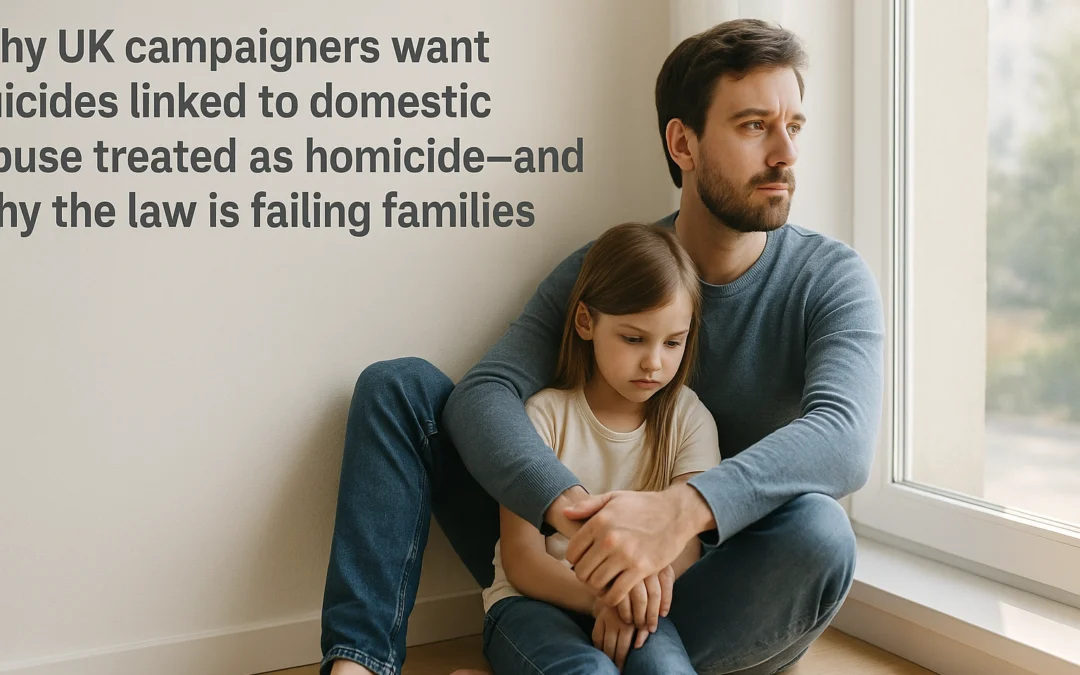
A powerful campaign is demanding fundamental change in how our justice system handles domestic abuse-related deaths. Families across the UK are calling for suicides linked to domestic violence to be investigated and prosecuted as homicide cases: and their arguments expose shocking gaps in legal accountability that affect every family navigating our broken court system.
The Campaign That's Shaking Up Family Law
The "Suicide is Homicide" campaign, launched by Project Resist alongside bereaved families, represents more than grief: it's a battle cry for justice that every parent should understand. When Saskia Lightburn-Ritchie declared at Westminster, "Suicide is homicide when it's the final chapter of a story of abuse," she exposed a truth that reverberates through every family court in the country.
Here's the reality: Between 2020 and 2024, domestic abuse killed 1,012 people in England and Wales. But here's what will shock you: 354 died by suicide compared to just 332 homicides. More victims are taking their own lives than being directly murdered, yet our legal system treats these deaths as completely separate issues.
This isn't just about domestic violence statistics. This is about systemic failure that touches every aspect of family law, from custody battles to protection orders. When our courts fail to hold abusers accountable for driving victims to suicide, they're failing to protect families at the most fundamental level.

Real Stories, Real Failures
The cases that sparked this campaign reveal everything wrong with our current approach. Take Chloe Holland's story: a young mother whose death by suicide followed sustained abuse. Her family watched as limited accountability meant justice remained elusive. The abuser faced minimal consequences while a family grieved a preventable loss.
Hannah Lightburn-Ritchie's case follows a similar pattern. After prolonged coercive control and psychological abuse, she took her own life. Yet the legal system treated her death as an isolated tragedy rather than the final act of a sustained campaign of abuse. Her mother, Saskia, now leads the charge for change, declaring: "She was killed slowly and deliberately."
These aren't isolated incidents. Refuge charity estimates three domestic abuse victims die by suicide every week in the UK. That's one every four days: more frequent than the murder rate of every three days. Yet prosecutions for these deaths remain virtually non-existent.
Why Our Legal System Is Broken
The directors of Project Resist put it bluntly: "Too many families who have lost loved ones to suicides linked to domestic abuse are being grievously failed by a profoundly broken justice system." Their analysis cuts to the heart of what's wrong with family law in Britain today.
We have the laws. We need the will.
The Crown Prosecution Service already advises prosecutors to consider murder and manslaughter charges in suicide cases involving domestic abuse or controlling behavior. The legal framework exists. What's missing is consistent implementation and accountability at every level.
This same pattern of legal tools without enforcement plagues family courts daily. We see it in contact orders that go unenforced, in protection measures that lack teeth, in a system that talks tough on paper but fails families when it matters most.

The Enforcement Crisis
Police, CPS, and judges repeatedly miss opportunities for justice. Current laws often exist but aren't enforced: sound familiar? This is the same enforcement crisis affecting fathers fighting for their children's rights, parents seeking protection from false allegations, and families navigating a system that promises much but delivers little.
When domestic abuse victims take their own lives after sustained coercive control, the legal system treats it as a mental health issue rather than a criminal justice matter. The abuser walks free while families bury their loved ones with no accountability, no justice, and no closure.
The barriers are systemic:
- Inconsistent application of existing laws across jurisdictions
- Reluctance to pursue complex cases requiring proof of psychological causation
- Language barriers that prevent family engagement with legal processes
- Risk to families and witnesses who must continue living near perpetrators
What Campaigners Are Demanding
The campaign's demands should resonate with every parent fighting for justice in family courts:
Real investigations: Treat domestic abuse-related suicides as potential homicides from day one. No more dismissing these deaths as inevitable mental health tragedies.
Actual prosecutions: Hold abusers criminally accountable for driving victims to suicide through sustained campaigns of psychological torture.
Systemic change: Reform the entire approach to domestic abuse deaths, from initial police response through court proceedings.
These demands echo what fathers' rights advocates have argued for years: our legal system must move beyond good intentions to meaningful action. Laws without enforcement are just words on paper.

The Broader Impact on Family Justice
This campaign exposes fundamental flaws that affect every family case. When courts fail to hold domestic abusers accountable for driving partners to suicide, they're revealing the same institutional weaknesses that fail fathers seeking equal custody, mothers facing false allegations, and children caught in the crossfire.
The pattern is clear:
- Existing laws that sound strong but lack enforcement
- Inconsistent application across different courts and regions
- Systemic reluctance to pursue complex cases requiring sustained effort
- Families left without justice while perpetrators face minimal consequences
The Language Barrier Problem
Even the terminology creates obstacles to justice. "Domestic Homicide Review" can be "an absolute blocker" to family engagement because the language doesn't fit suicide cases. Families find these terms off-putting and inappropriate, reducing their willingness to participate in processes that might deliver accountability.
This linguistic barrier reflects broader communication failures throughout family courts. When legal systems can't even name problems correctly, how can they solve them effectively?
Moving Forward: A Call for Reform
Every family deserves a justice system that works. The statistics are damning: more domestic abuse victims die by suicide than homicide, yet virtually no abusers face criminal charges for these deaths. This represents a complete breakdown of legal accountability that extends far beyond domestic violence into every aspect of family law.
Campaigners are demanding recognition that when someone subjects a partner to prolonged coercive control, and that partner subsequently takes their own life, the abuser bears criminal responsibility. This isn't just about changing how we classify deaths: it's about fundamentally reforming how our courts approach accountability in family relationships.
The families leading this campaign aren't seeking revenge. They're demanding justice that could prevent future tragedies. When Saskia Lightburn-Ritchie says "until we hold abusers accountable, until we say their names out loud, we're failing every single victim and every family that goes through this experience," she's speaking for every parent who's watched our legal system fail when it mattered most.
The time for half-measures is over. Our justice system must evolve to protect vulnerable family members from abusers who drive them to suicide. These deaths aren't inevitable mental health tragedies: they're the predictable end result of sustained psychological torture that our courts currently ignore.
Fathers United. Rights Respected. Every Dad Matters.
But so does every family member threatened by abuse. Real reform means holding abusers accountable for all their crimes: including driving partners to suicide through sustained campaigns of psychological violence. Only then can we build a family justice system worthy of the families it's supposed to protect.
Ready to make a difference? Join us in advocating for comprehensive family law reform that protects all family members from abuse and holds perpetrators accountable for their actions. Visit fathersrights.co.uk to learn how you can support meaningful change in our broken justice system.